
Description
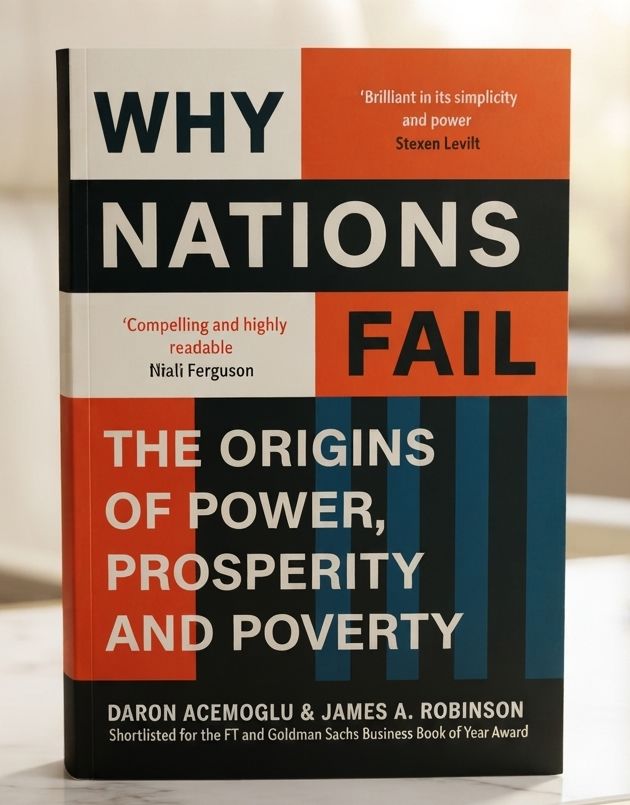
Why are some nations prosperous while others continue to struggle with poverty and instability? In Why Nations Fail: The Origins of Power, Prosperity, and Poverty, renowned economists Daron Acemoglu and James A. Robinson provide a compelling explanation based on decades of historical and economic research.
The authors argue that the success or failure of nations is determined primarily by the quality of their political and economic institutions. Countries with inclusive institutions that protect property rights, encourage innovation, promote equal opportunities, and uphold the rule of law tend to experience sustainable economic growth. In contrast, nations governed by extractive institutions, where power and wealth are concentrated in the hands of a few, often struggle with corruption, inequality, and long-term underdevelopment.
Using fascinating case studies from ancient civilizations to modern economies, Acemoglu and Robinson compare countries that share similar geography and culture but have experienced vastly different economic outcomes. They examine examples from North and South America, Europe, Africa, Asia, and the Middle East to illustrate how institutions influence prosperity, democracy, innovation, and national development.
The book challenges traditional explanations that attribute poverty solely to geography, climate, or cultural differences. Instead, it demonstrates how political decisions, leadership, and institutional structures shape the economic future of nations. Readers gain valuable insights into governance, public policy, economic development, entrepreneurship, and the relationship between freedom and prosperity.
Why Nations Fail has become one of the most influential books on economics, political science, and development studies. It is widely recommended for students, policymakers, entrepreneurs, business leaders, researchers, and anyone interested in understanding the forces that shape the global economy.
Whether you are studying economics, building a business, or seeking a deeper understanding of world history and development, this bestselling book offers powerful lessons on how institutions influence opportunity, innovation, and long-term national success. It is an essential addition to every library focused on economics, leadership, politics, and global affairs.



Reviews
There are no reviews yet.